How to Teach Telling Time: Analog First, Step by Step
How to Teach Telling Time (Start With the Analog Clock)
The short answer: use an analog clock, not a digital one, and follow this order: o'clock first, then half past, then quarter past and quarter to, then five-minute steps, and finally any minute. Each step builds on the one before it, and skipping ahead is the number one reason a 6 year old "just doesn't get" the clock.
One tip before you start: don't teach made-up times. Teach the times of your kid's actual day. "We eat lunch at half past twelve" is worth more than twenty worksheets.
Why Analog Before Digital?
Because a digital clock hands over the answer. 7:45 is two numbers on a screen. They don't tell you whether 8 o'clock is close or far away, or how long bath time has lasted.
On an analog clock, time is something you can see. The hand moves, your kid can watch how much road is left until it's time for the park, and an hour has a shape: one full trip around. Half a trip is half an hour. Without noticing, your child is learning fractions with their hands.
Digital needs no lesson at all. Once a kid understands what "half past seven" means on the kitchen clock, reading 7:30 on the microwave takes one afternoon. It doesn't work the other way around: a kid who only reads screens can name the time but doesn't know what it is.
What Order Do You Teach Time In?
This is the sequence that works, and each step can take weeks:
- O'clock. Only the little hand matters. "The little hand points at 3, so it's three o'clock." The big hand is always on the 12, so there's not much to look at. Stay here until they say it without thinking.
- Half past. The big hand drops to the 6. Here comes the first trap: the little hand no longer points at a number, it sits between two. More on that below, because this is where almost every kid gets stuck.
- Quarter past and quarter to. The clock splits into four pieces, like a pizza. Big hand on the 3 is "quarter past," on the 9 is "quarter to."
- Five-minute steps. The 1 is worth 5 minutes, the 2 is worth 10, the 3 is worth 15. This step needs comfortable skip counting by fives. If your kid isn't there yet, practice that first, with the clock in front of you if you like: it's the perfect excuse.
- Any minute. Seven past three, two minutes to five. Now it's just sharpening what they already know.
There's no prize for speed. A kid who spends a whole month on o'clock isn't behind. They're building the base that makes everything after it easy.
Anchor Every Time to Their Day
Times in a vacuum mean nothing to a child. "Half past four" is noise. "Half past four, when you get home from school and have a snack" is information.
So use their routine as your teaching material:
- "We eat at half past twelve. Look at the clock: is it almost time?"
- "Bath time is at eight. Where will the little hand be?"
- "Ten more minutes at the park. What number will the big hand be on when we leave?"
Ask "what time is it?" only when the answer actually matters to them. A kid who wants to know how long until their show learns faster than one filling in a worksheet, because they have a reason to look at the clock.
Put a Real Clock at Kid Height
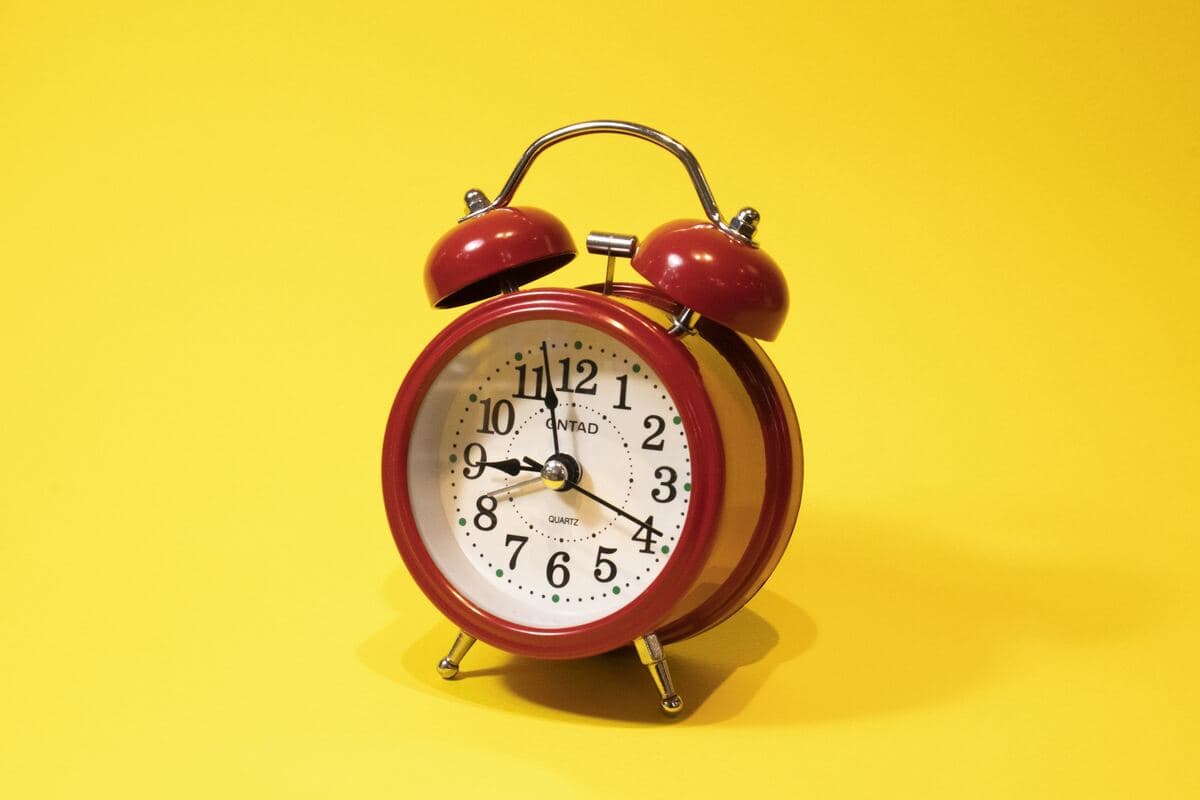
It sounds obvious and almost nobody does it: hang an analog clock where your child can see it properly, in the kitchen or in their room. One with all 12 numbers, clear and big. No Roman numerals, no designer faces with blank dials.
Even better if they can touch one. A toy clock with hands that turn, or a homemade one from a paper plate and two cardboard strips, lets your kid set times themselves. "Show me five o'clock" teaches more than reading it, because they have to think about where each hand goes instead of recognizing the picture.
The Most Common Confusion: The Hour Hand Between Two Numbers
It shows up sooner or later. It's half past two, the little hand sits halfway between the 2 and the 3, and your kid announces it's "half past three." Or worse: at 2:55 the little hand is nearly touching the 3, and they swear it's five to three, three something, anything but two.
That's not carelessness, it's logic: you told them the little hand points at the hour, and right now it points at the 3. Try this explanation: the little hand works like your age. You're 6 until the day you turn 7, even if your birthday is next week. The clock says "two" until the little hand truly reaches the 3, even when it's almost there.
Then practice it on purpose: set the toy clock to 2:50, 4:55, 6:40, and ask only "what hour is it, forget the minutes?" until the little hand stops fooling them.
What You Can Do Today
Hang an analog clock where your kid can see it and say one anchored time at lunch: "Half past twelve, lunchtime. Look, the big hand is on the 6." That's a real start.
For reading practice, our telling time game follows exactly this sequence: five levels, from o'clock to any minute, and the hour hand creeps between the numbers the way a real clock does. No timer and no pressure: two or three clocks a day is plenty. If you already run a 5-minute daily math routine, reading one clock fits perfectly as a day's activity.
After that, let the clock on the wall do the rest. Every "how long until the park?" is a free lesson.