Memory Games for Kids: What Matching Games Really Train
Memory Games for Kids: What Matching Games Really Train
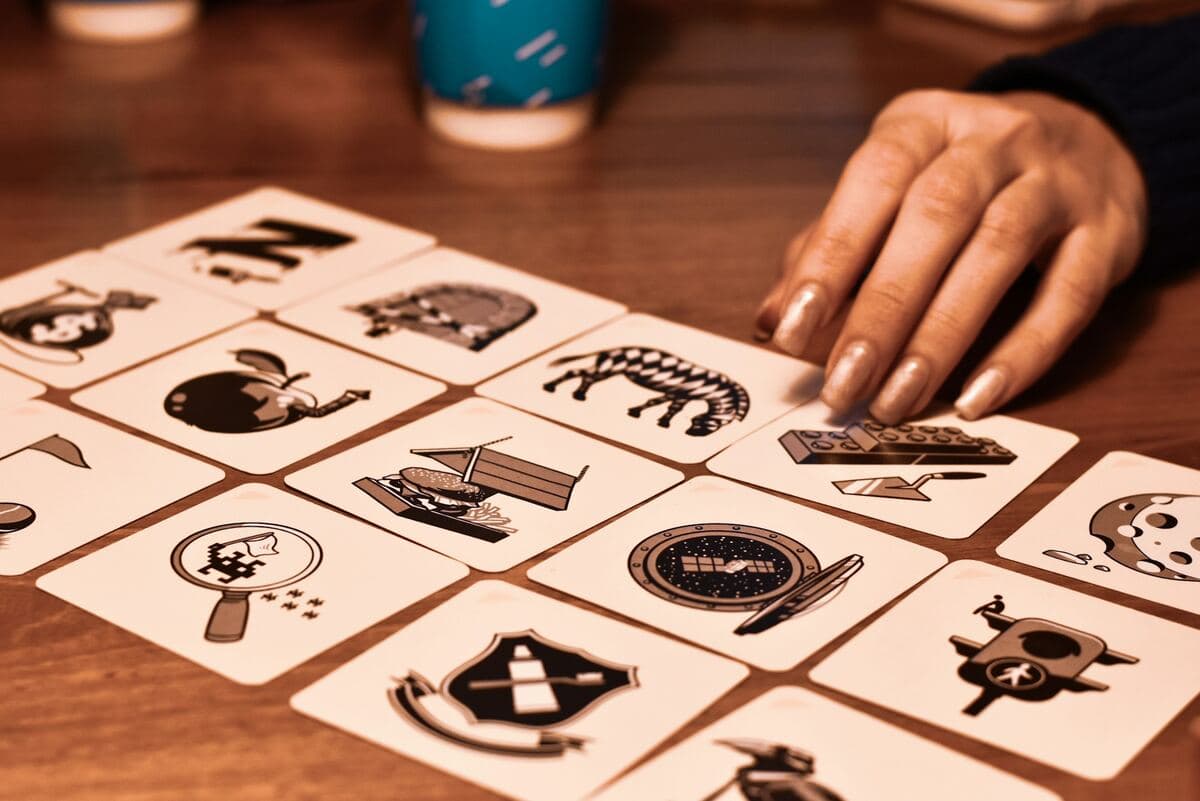
The matching game looks too simple to teach anything. Cards face down, flip two, keep them if they match. That's it. But under that simplicity there are three mental muscles working at once: working memory, sustained attention and, if two of you are playing, the patience of waiting for your turn.
None of the three comes pre-installed. They get trained. And few activities train them as well, with as little equipment and as little resistance from the child, as a ten-minute round of memory.
What happens in your child's head during a game
When your child flips a card with a banana on it, looks at it and turns it back over, they have to do something surprisingly hard: hold what it was and where it was in their head while the game keeps moving. That's working memory, the ability to retain information and use it at the same time. It isn't "remembering things" in general; it's keeping a fact in the air while you do something else with it.
Attention works just as hard. Playing well means watching more than your own cards: you have to track the ones the other player flips too. A 4-year-old who stays locked on the board for a whole game is sustaining attention longer than they would for almost any task you could put in front of them.
And when two of you play, there's a third lesson hiding in there. Watching your mum flip exactly the pair you had located, and being unable to do anything until your turn, is frustration tolerance in small, digestible doses. You learn to lose a round without the world ending.
What is working memory for at school?
Reading, for a start. When a child reads "the dog we saw yesterday at the park belonged to the neighbour", they have to hold the beginning of the sentence while decoding the end. If the dog has dropped out of their head by the time they reach "neighbour", they haven't read: they've deciphered separate words. Many kids who "read but don't take it in" don't have a reading problem; their working memory is swamped by the effort of decoding.
Math is the same story. Add 23 + 9 in your head and notice what you do: store the 23, add 9 to the 3, carry one, add it to the 2. All those intermediate results live in working memory. The child who loses the thread halfway through isn't bad at adding; the number they were holding simply fell out.
Playing memory won't magically produce a better reader. What it does is provide practice at holding and using information in a setting where mistakes cost nothing. As we wrote in learning math through play, kids practise far more, and in a far better mood, when they don't know they're practising.
How to play with a 4-year-old
Start with 6 pairs, 12 cards. Not one more. With 20 cards on the table, a 4-year-old gets lost by the second turn and gives up; with 12 they can win, and winning is what brings them back tomorrow.
Let them narrate. Young kids play better when they say what they see out loud: "banana... where was the other banana?". Don't shush them and don't hurry them. That running commentary isn't noise, it's their strategy: naming the card helps them pin it down. Over time the voice turns inward, which is exactly where we want it to go.
You, meanwhile, play "short": use only the cards flipped in the last two turns and deliberately forget the rest. That way they win most games without you having to fake it in any obvious way. And when you do score a pair, cheer their next one twice as loudly.
A 6-pair game takes about five minutes. Two games and move on. Better to stop while they want more than to stretch it into boredom.
How the game changes at age 7
At 7, six pairs feel small: go up to 8 or 10 and the game gets its spark back. At this age you can play almost for real, using your actual memory, because a 7-year-old spots a gifted win instantly and it drains all the merit out of their victory.
What's new at this age is talking strategy. After the game, ask: "how do you remember where they are?". Some kids group by zones ("the animals were all at the top"), some repeat the names under their breath, some stare at a position for an extra second. Putting words to your own strategy is one of the most valuable things in the whole game, and it only happens if somebody asks.
You can also vary the rules so it doesn't wear out: whoever matches goes again, or whoever matches has to name a word starting with the same letter, or you play against total time instead of taking turns. The structure holds up to almost anything.
Play too, don't just leave them with the cards
A child alone with the cards practises memory. A child playing with you practises memory, turns, winning, losing and conversation, all in the same game. You also get to see things no app will ever report: whether they crumble at the second miss, whether they watch your cards or only their own, whether their strategy changes from one week to the next.
For the moments without a table (the waiting room, the train, the half hour before dinner at grandma's), our memory game follows the same progression: an easy level with 6 pairs, medium with 8 and hard with 10, with animal, fruit, face and vehicle cards. No timer and no ads, so your child plays at the pace their memory needs, not the pace a countdown dictates. Sit next to them the first time and commentate the moves just as you would at the table.
Tonight, after dinner, try this: 6 pairs on the table, one game narrated out loud, and one single question at the end: "how did you manage to remember?". Ten minutes. That's all the equipment and all the time it takes.