How to Teach Kids to Hold a Pencil: Grip by Age, No Battles
How to Teach Kids to Hold a Pencil Correctly (and When to Do Nothing)
The short answer: you almost never need to teach it. Pencil grip matures on its own, in stages, just like walking or talking. A 2 year old clutching a crayon in her fist is not doing it wrong. She's exactly where she should be.
What you can do is hand over the right tools at each age and, around 4 or 5, give one small nudge with a trick that takes five seconds. That's what this article covers: which grip to expect at each age, the pinch-and-flip trick, why short pencils beat long ones, and how to tell a quirky-but-functional grip from one worth mentioning to the teacher.
How does pencil grip develop by age?
At 2, kids hold a crayon in a closed fist, like a hammer, and move the whole arm from the shoulder. The scribbles come out huge and wobbly. Perfect. That's the stage they're in.
Around 3, the fist opens up. The fingers point down toward the tip and the movement comes from the elbow instead of the shoulder. It still looks nothing like the way you write, and it's still fine.
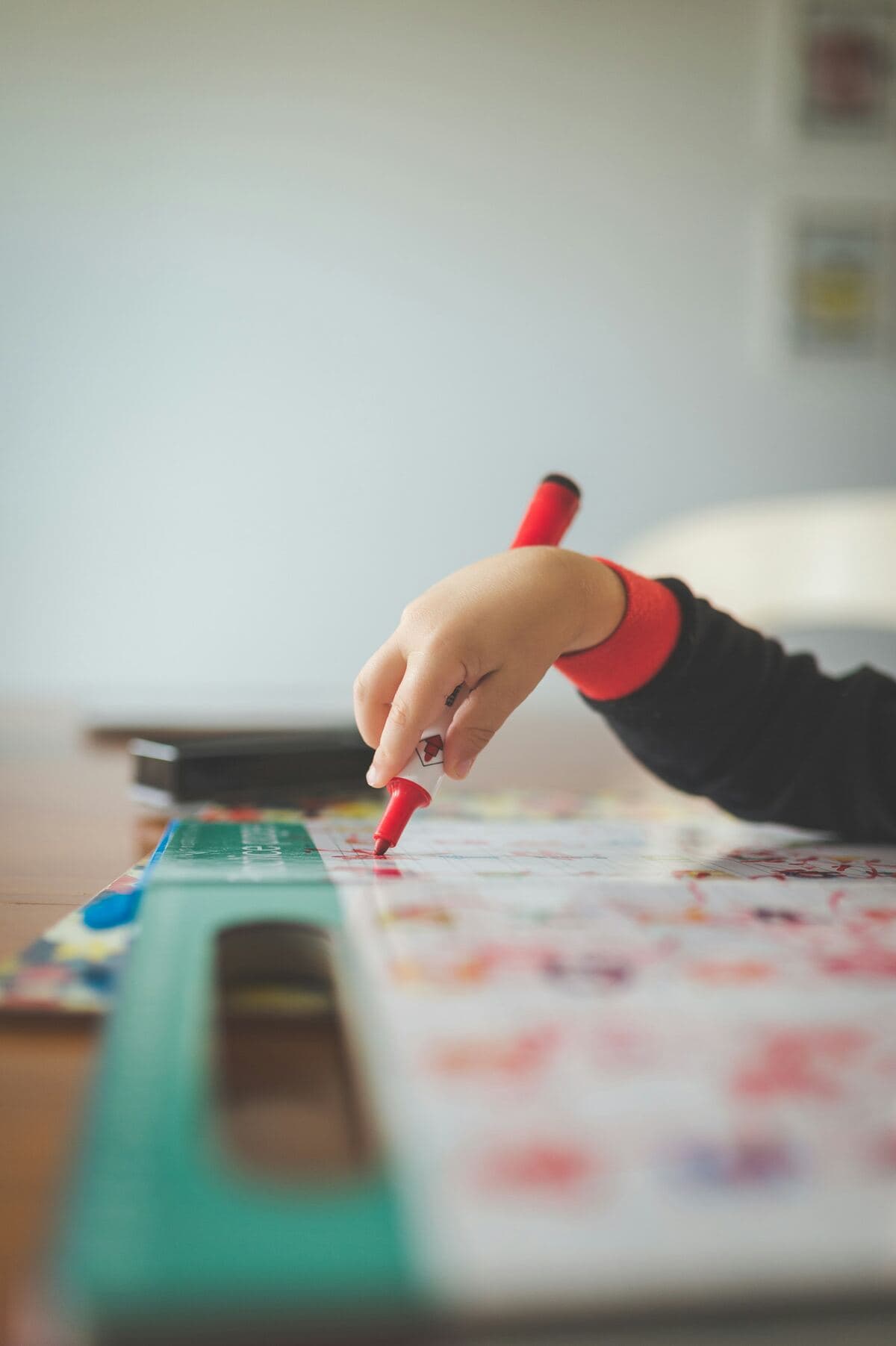
Between 3 and a half and 4, many kids shift to holding the pencil with four fingers, moving from the wrist. And between 5 and 6, the pinch grip (the tripod) arrives: thumb and index finger hold the pencil, it rests on the middle finger, and the movement comes from the fingers themselves.
Look at those ages again. The "correct" grip shows up at 5 or 6, not at 3. If your 3 year old is still using her fist, she's not behind. And correcting your way past a stage speeds up nothing; it just makes drawing stop being fun.
The pinch-and-flip trick
When your kid is 4 or 5 and you want to help the fingers land in the right spot without a lecture, try this:
- Lay the pencil on the table with the tip pointing toward the child.
- Ask them to pinch the pencil near the tip with thumb and index finger, like picking up a french fry.
- Have them flip it backward until it rests in the web between thumb and index finger.
The pencil lands in tripod position all by itself. No explaining where each finger goes, no rearranging their hand with yours. Make it a tiny ritual before drawing ("pinch and flip") and within a few weeks they'll do it without thinking.
If the fingers collapse after two minutes, that's fine. Repeat the ritual tomorrow. The position holds on its own once the hand is strong enough, and that strength comes from drawing, cutting, squishing playdough and hanging off monkey bars. Not from posture practice.
Short pencils and broken crayons
It sounds backwards, but a short pencil teaches more than a long one. A whole fist doesn't fit on a two-inch pencil stub, so the fingers have no choice but to pinch. That's why broken crayons are gold: don't throw the pieces away, they're the best tool you have in the house.
By age, here's what works:
- At 2 and 3: chunky short crayons, sidewalk chalk, finger paint. Anything wide for a small hand.
- At 4 and 5: crayon pieces an inch or two long, triangular pencils, regular pencils snapped in half.
- At any age: drawing on a vertical surface. Paper taped to the wall or an easel puts the wrist in the right position without anyone saying a word.
The silicone grip trainers sold for positioning fingers can help in specific cases, but a child developing normally doesn't need one. Before buying anything, try two weeks of broken crayons.
When should you correct it, and when should you leave it alone?
Rule of thumb: before age 4, correct nothing. The fist and the four-finger grip are stages, not mistakes, and correcting them is like scolding a baby for crawling instead of walking.
From 4 or 5 on, correct rarely and lightly. The pinch-and-flip trick once at the start, and that's it. No repositioning their fingers every three strokes, because the message they receive isn't "this is how you hold a pencil" but "drawing with you is a test".
What if they're 6 or 7 and the grip isn't the textbook tripod? Check three things: writing without pain, at a normal pace for their age, and legibly. If all three are true, leave it alone. Some technically "incorrect" grips, like the four-finger one, work beautifully for a lifetime. The goal was never a perfect photo of the hand; it was comfortable writing.
Signs worth mentioning to the teacher
None of these automatically means there's a problem, but several together, or one that keeps repeating, justifies a question at the next parent-teacher chat:
- They complain their hand hurts, or drop the pencil every few minutes because it "gets tired".
- They press so hard they snap tips or tear through the paper most of the time.
- At 6, they still write by moving the whole arm instead of the fingers.
- Past age 5, they still switch hands constantly.
- They avoid drawing, coloring and cutting whenever possible, not just prefer something else.
The teacher watches twenty kids the same age write every day, so they have the reference point you're missing. If needed, they'll point you toward a proper assessment without drama. Asking early isn't overreacting; it's clearing up doubts.
What you can do this week
If your kid is 3 or 4, forget letters. Print a couple of our trace lines worksheets and have them do the strokes with a short crayon piece: straight lines, curves, zigzags. That's exactly the muscle letters will need later.
If they're 5 or 6 and already working on letters, do the pinch-and-flip ritual before starting, then five minutes of copy letters worksheets, not thirty. When they get tired, stop.
And whatever happens, keep free drawing alive. A kid who draws because they want to is training their hand far more than one filling in worksheets because they must.