7 Math Games You Can Play at Home With Zero Screens
7 Math Games You Can Play at Home With Zero Screens
Screen time has its place, but sometimes you just want your kid doing math with their hands. These 7 games need stuff you probably already have at home. No apps, no batteries, no Wi-Fi.
1. Dice Addition Race
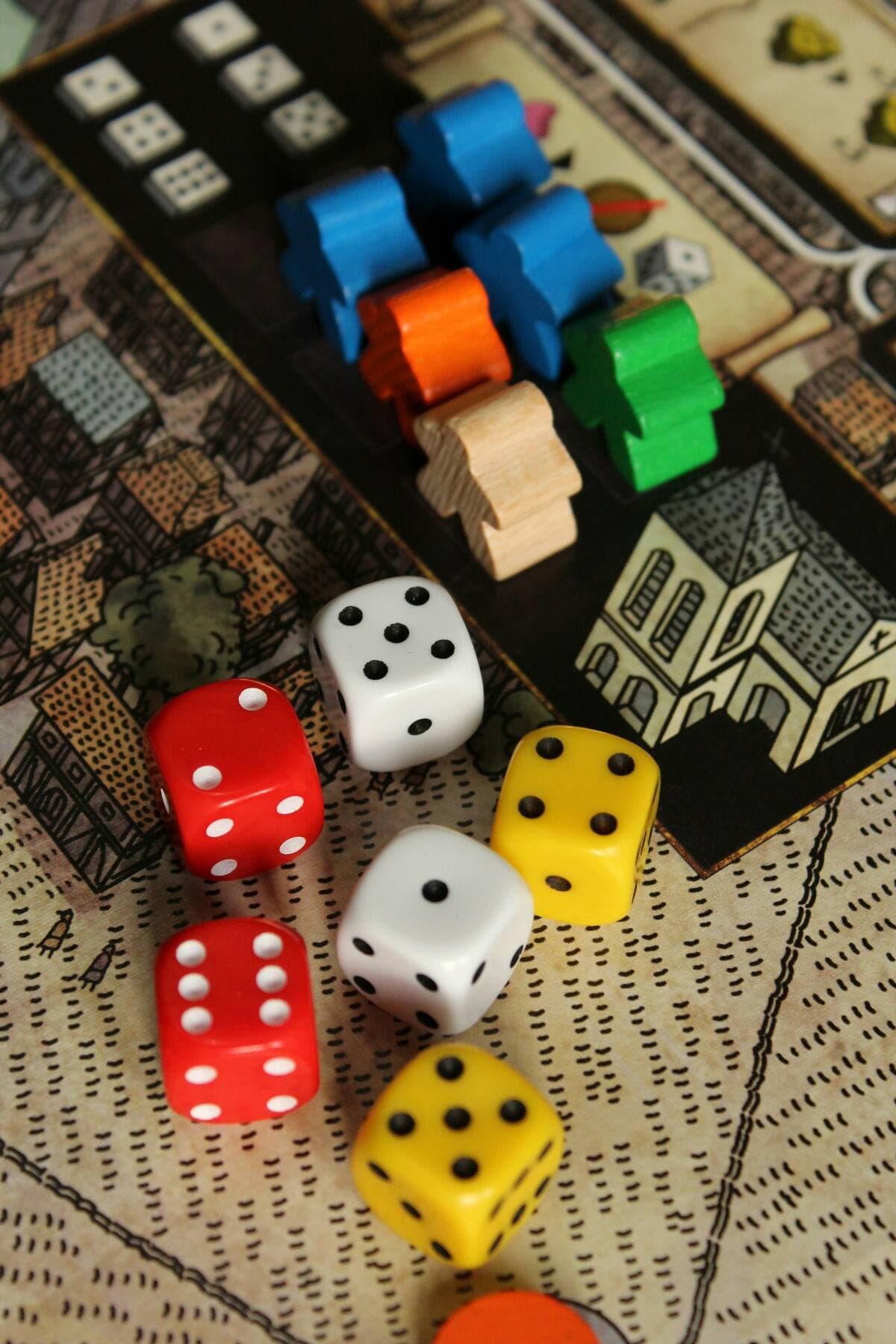
Grab two dice and a piece of paper. Each player rolls both dice and adds the numbers. Write down the sum. First person to reach a total of 50 wins. For younger kids, use one die. For older kids, use three.
This is pure addition practice disguised as a race. Kids will beg to play again.
2. Card War (Math Edition)
Use a regular deck of cards. Each player flips two cards and adds them together. Whoever has the higher sum takes all four cards. Face cards count as 10, aces as 1.
Once addition gets easy, switch to multiplication. Flip two cards and multiply instead. Same game, harder math.
3. Measuring Cup Kitchen Math
Next time you cook, hand your kid the measuring cups. "We need 1 cup of rice. Can you fill the 1/2 cup twice?" Or "the recipe says 3/4 cup. Which measuring cup do we need?"
This teaches fractions in a way that actually makes sense. Plus you get dinner out of it.
4. Counting Change
Put a pile of coins on the table. Ask your kid to make 50 cents using different combinations. How many ways can they do it? Then try 1 euro or 1 dollar.
This covers addition, grouping, and problem-solving all at once. It also teaches them about money, which is useful for life.
5. LEGO Pattern Builder
Line up LEGO bricks in a pattern: red, blue, red, blue, red... Ask your kid what comes next. Then try harder patterns: red, red, blue, red, red, blue. Or use sizes instead of colors: small, big, small, big.
Patterns are the foundation of algebra. Your 5-year-old doesn't need to know that, though.
6. "I Spy" Numbers
On a walk or in the car, take turns spotting numbers. "I spy a number bigger than 20." "I spy two numbers that add up to 10." "I spy a number you can divide by 2."
It turns any boring errand into a game. Works especially well in grocery stores where numbers are everywhere.
7. Grocery Store Math
Give your kid a job at the store. "We need 3 apples and 4 oranges. How many fruits is that?" For older kids, try "these bananas cost 2 euros per kilo. We need half a kilo. How much will it cost?"
Real-world math sticks better than abstract math. When your kid calculates the price of bananas, they remember it.
When screens do help
These offline games are great for building a strong base. But online math games work well as a complement, especially for focused practice. Games like our addition and subtraction practice give instant feedback that's hard to replicate with dice and cards.
The best approach is both. Play dice games after dinner, do LEGO patterns on the weekend, and use online practice when your kid wants to play on a tablet anyway. That way, screen time is actually productive.