Subtraction Is Harder Than Addition. Here's Why.

Why Your Kid Struggles With Subtraction (and What Actually Helps)
Your kid can add just fine, but subtraction makes them freeze up. You're not imagining it. Subtraction really is harder, and there's a good reason for that.
Addition is putting things together. Kids do that naturally. They stack blocks, collect stickers, gather toys. But subtraction is the opposite. Taking away feels wrong. Nobody likes losing stuff.
The Real Problem: Only Thinking of "Taking Away"
Most of us teach subtraction as removal. "You have 5 apples, you eat 2, how many are left?" That works for simple problems, but it hits a wall fast.
The issue is that subtraction isn't just removal. It's also comparison ("how many more does she have than me?"), counting up ("how far from 3 to 7?"), and finding the difference. Kids who only know the "take away" model get stuck when problems don't fit that pattern.
Try this: ask your kid "what's 7 minus 3?" using the take-away model. Now ask "how many steps from 3 to 7?" Same answer, completely different thinking. Kids need both.
Start With Objects (Again)
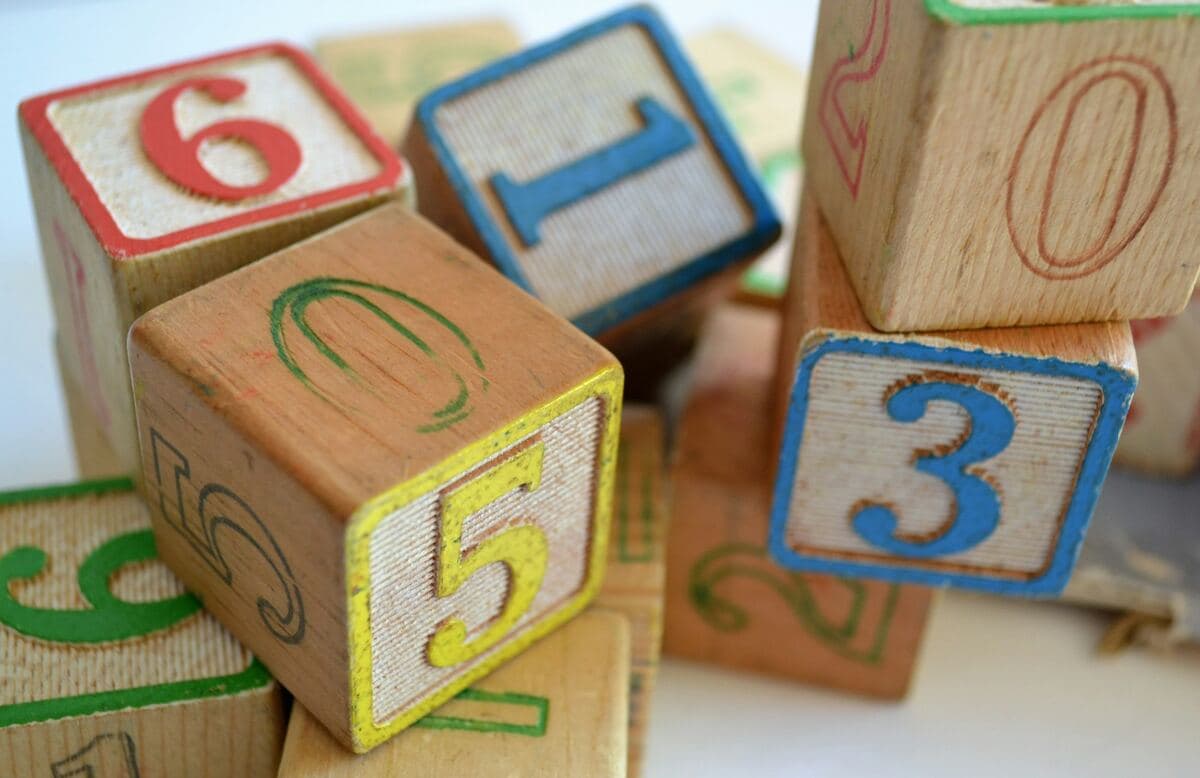
Just like with addition, you need to start physical. Get 8 blocks. Take 3 away. Count what's left. Simple.
But here's the part most parents skip: also line up 8 blocks and 3 blocks side by side. Ask "how many more does this row have?" That's subtraction too, and it teaches the comparison idea that becomes important later.
Do both versions with real objects for a while. "Take away" problems and "how many more" problems. Use snacks, toys, whatever keeps their attention.
The Number Line Trick
Draw a number line from 0 to 10 on a piece of paper. For "8 minus 3," put your finger on 8 and hop backwards 3 times. Where did you land?
This is better than just removing objects because it connects subtraction to counting and to the number system. Kids start to see that subtraction is movement on a line, not just stuff disappearing.
You can make it fun by drawing a frog that jumps backwards. Kids remember the jumping frog way longer than they remember a worksheet.
Why Regrouping Is So Brutal
Once kids get to problems like 42 minus 17, everything breaks. They can't just take away anymore because 2 minus 7 doesn't work. This is where most kids start hating math.
The fix starts way earlier. When your kid is working with small numbers, let them see that you can break numbers apart. 8 is the same as 5 and 3. 10 is the same as 7 and 3. Play with breaking and combining numbers before regrouping ever shows up in school.
What You Can Do Today
Here's a quick plan that works:
For beginners (ages 4-5): Stick to objects. Five crackers, eat two, how many left? Do this at every snack time. No paper, no stress.
For kids who know the basics (ages 5-6): Mix take-away and comparison problems. "You have 6 grapes, your sister has 4. How many more do you have?" Use our subtraction practice game for extra reps without the pressure of paper.
For kids ready for paper (ages 6-7): Start with subtraction worksheets that use small numbers. Let them draw pictures or use objects to check their work. Don't time them.
Be Patient With This One
Subtraction takes longer to click than addition. That's normal. If your kid is struggling, they're not behind. They're just working through something genuinely harder.
Go back to objects. Go back to comparison problems. Make it physical and visible. The understanding will come, and when it does, it sticks.