Times Tables Games That Make Multiplication Stick
Times Tables Games That Make Multiplication Stick
Reciting the 7 times table ten times in a row works terribly. Your kid sings it like a song, and the next day you ask "what's 7 times 6?" out of order and you get a blank stare. It's not a lack of effort. The brain keeps what it uses, not what it repeats.
What does work is playing. Short rounds, almost every day, with the questions shuffled. Five minutes of a game where they have to pull "7 times 6" out of memory beats half an hour of chanting the table in order. Here are the games that work best at home, from the simplest to the most involved.
One heads-up before you start: if your kid still hesitates over basic addition, multiplication can wait. We cover how to tell if they're ready for multiplication in another article.
Question Ping-Pong
The simplest game needs nothing at all. You serve a multiplication and your kid returns it: "3 times 4?" "12!" "6 times 6?" "36!" Five or six questions and you're done. It works in the car, in the elevator, while you set the table together.
Two details make all the difference. First, shuffle the questions. If you follow the order of the table, it turns back into a song and nothing gets practiced. Second, swap roles. When your kid asks and you answer, get it wrong on purpose now and then: "8 times 4?" "Hmm... 34?" Catching a grown-up in a mistake is far more fun than being right, and to catch you they have to know the correct answer.
Dice Games
Roll two dice and say the product. If you get a 4 and a 6, the answer is 24. That simple. Take turns: whoever gets it right rolls again, whoever misses passes the dice.
With two regular dice you only get up to 6 times 6. For the higher tables, fix a multiplier for the whole round: "today everything gets multiplied by 8." Your kid rolls one die and multiplies whatever comes up by 8. Ten rolls like that and they've reviewed the entire 8 times table, out of order and without noticing.
Multiplication War
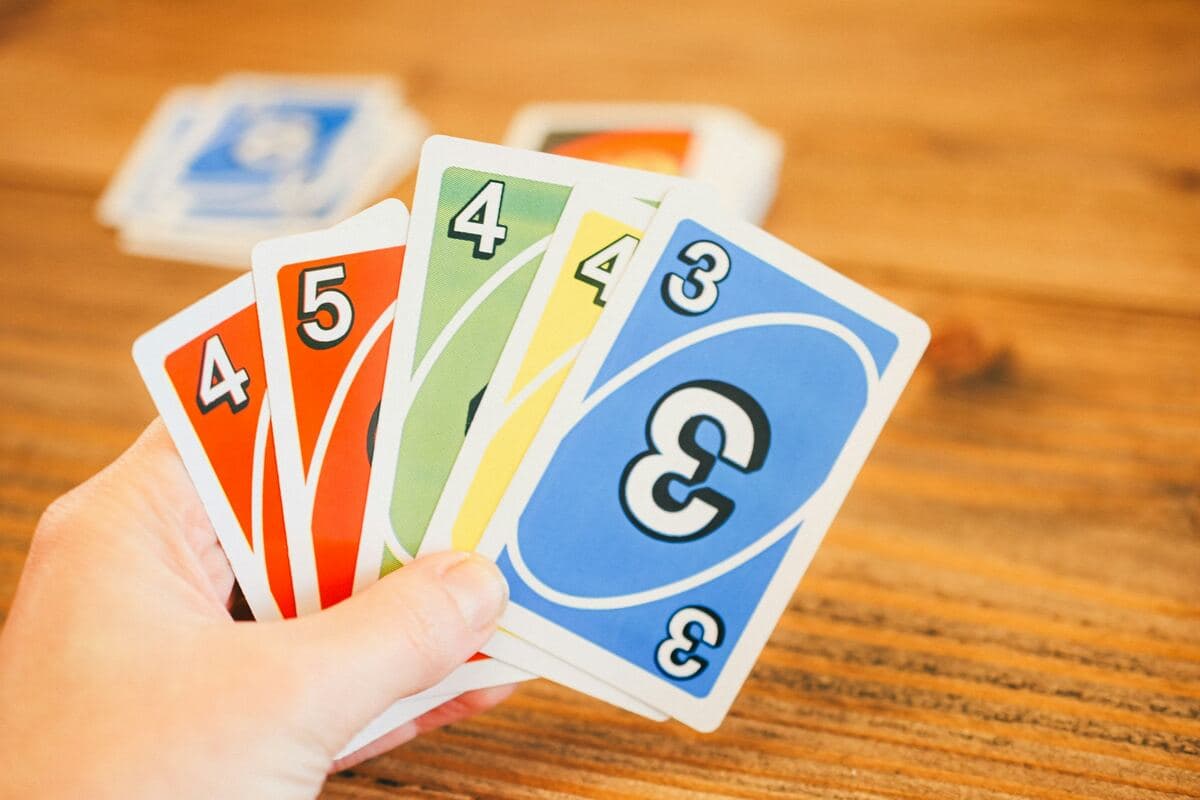
For this one you need a deck of cards. Take out the face cards (or count them as 10) and split the deck between the two of you. At the same time, each of you flips one card. The first to say the product of the two cards keeps them both. When the deck runs out, whoever holds more cards wins.
If the skill gap is big, give your kid a head start: you wait a beat before you're allowed to answer. That keeps the game exciting for both of you and nobody gets discouraged.
Skip Counting: Half the Work
Counting by 3s (3, 6, 9, 12...) is the 3 times table in disguise. Make it a habit: one number per step going up the stairs, or on the walk to school. Switch tables every week.
Songs help a lot here. Singing the 6 times table to the tune of a song they already know gives them a hook to hang it on, and making up a silly version together works even better than finding a ready-made one.
That said, skip counting is half the table, not the whole thing. Your kid can reach 18 by jumping in 3s, but they still need to connect "3 times 6" to that 18 directly. The other games on this list do that second half.
Five Minutes of Screen Practice
The same rule applies to online practice as to everything else: short and frequent. Our multiplication practice game is built around exactly that. Your kid answers multiplication problems at their own pace, with no timer and instant feedback. Five minutes after their snack, every day, and within a few weeks you'll notice the difference.
Instant feedback matters more than it seems. If they practice alone and nobody checks until the end, they can repeat the same mistake twenty times and learn it wrong. In the game they see it right away.
The Worksheet-With-Mistakes Trick
Our multiplication worksheets can be a game too, literally. Print one and solve it yourself, sneaking in three or four mistakes. Then hand your kid a red pen and let them play teacher. Grading forces them to check every single problem, which is exactly the practice you want, just with the roles reversed. Kids love giving out marks.
And which table should you start with? Any of them: what makes the facts stick isn't the order, it's playing a little every day.
Start Today With the Simplest One
You don't need a plan. Tonight, while you clean up the kitchen, serve three questions from the table they're learning. Tomorrow, a round of dice. On the weekend, multiplication war. If one game doesn't grab them, try another. There are more ideas like these in our guide to learning math through play.
The sign that it's working is unmistakable: the day your kid asks to play again, the times tables are already half learned.